
Great Falls, VA Rockfall Update
3/19 UPDATE: We’ve heard the arete has shifted and is unstable. Steer clear until further information becomes available! The report below is provided as a record only.
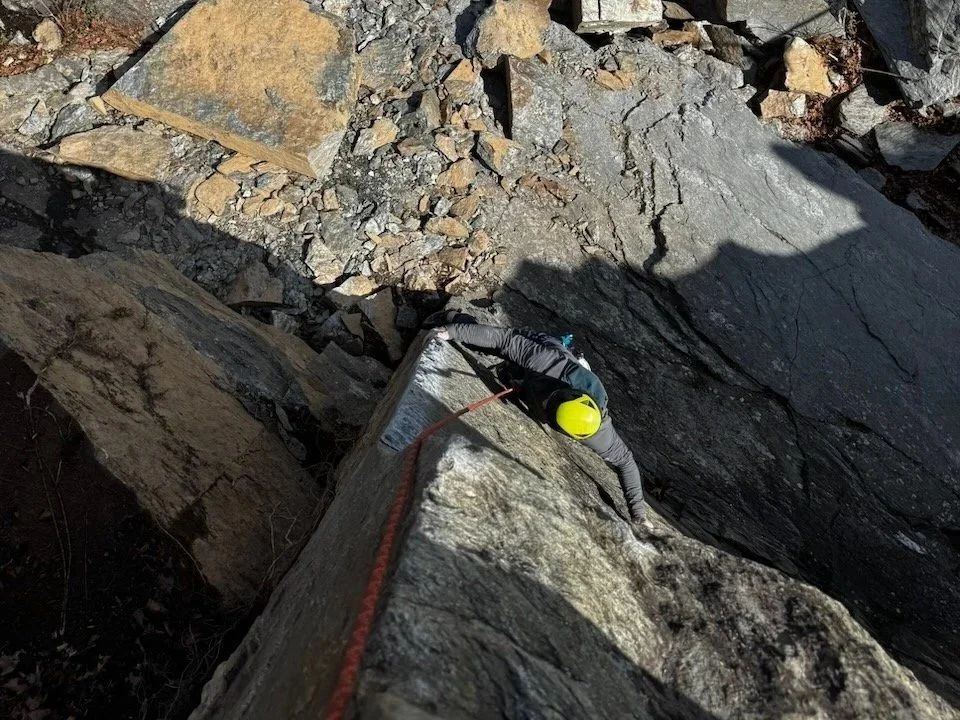
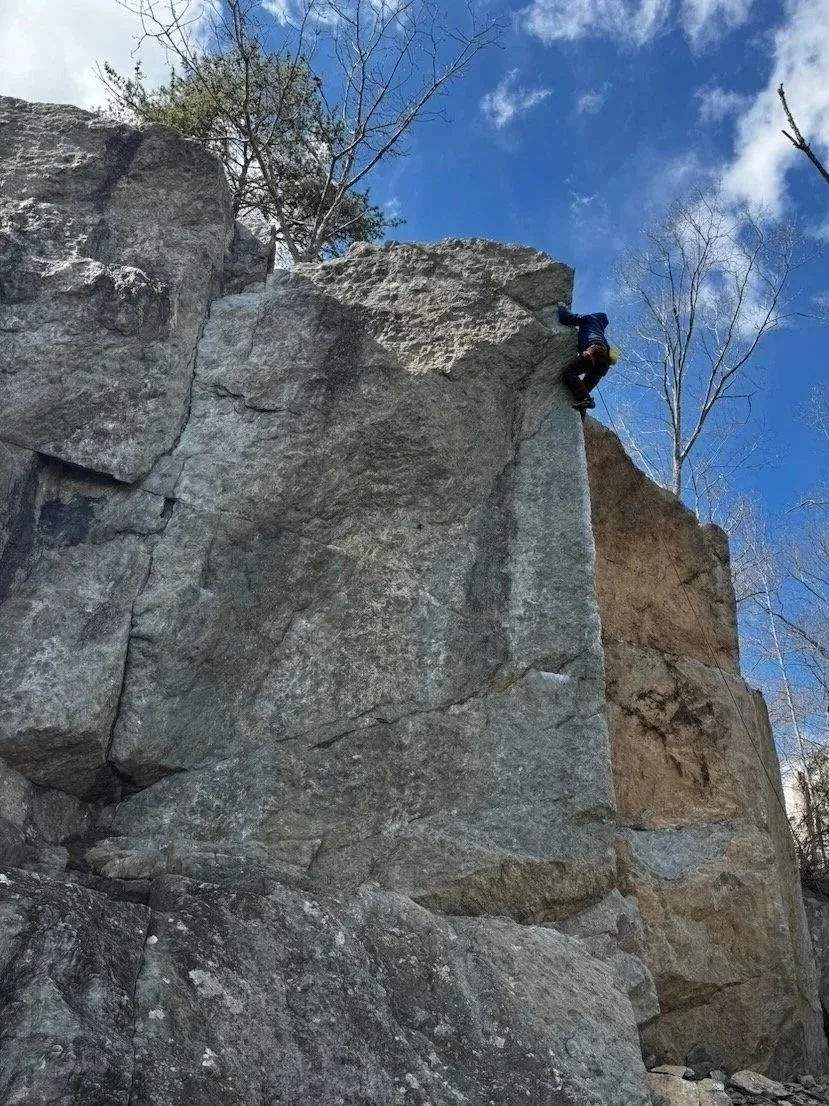
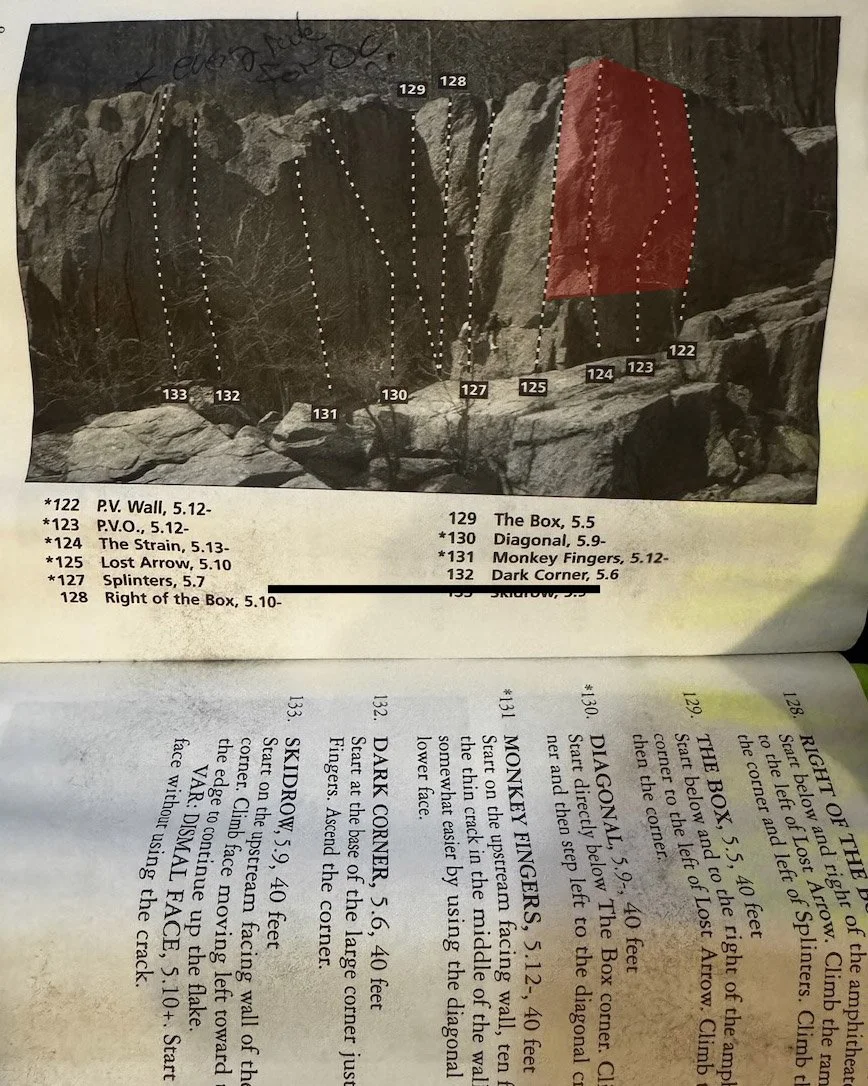
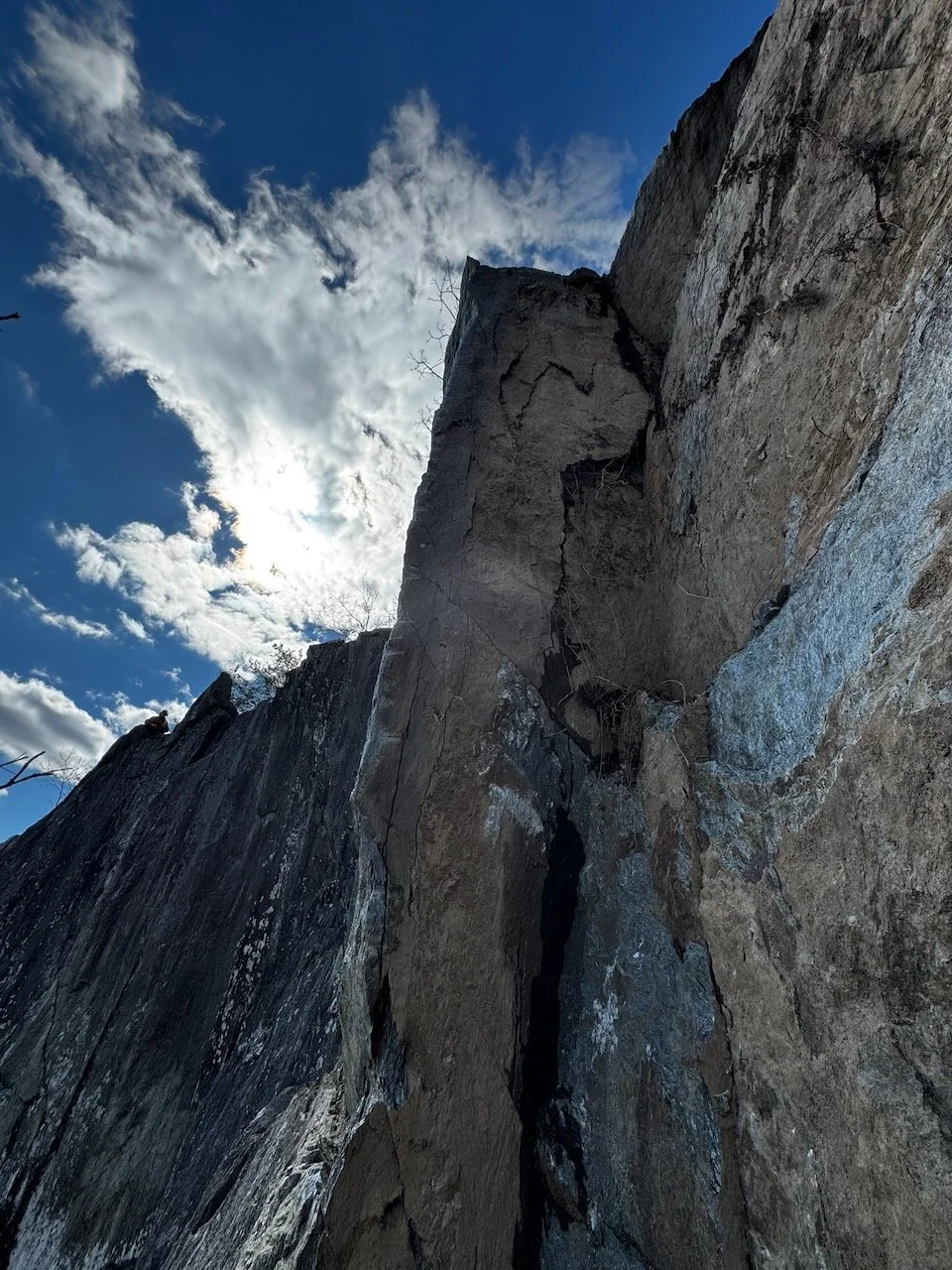
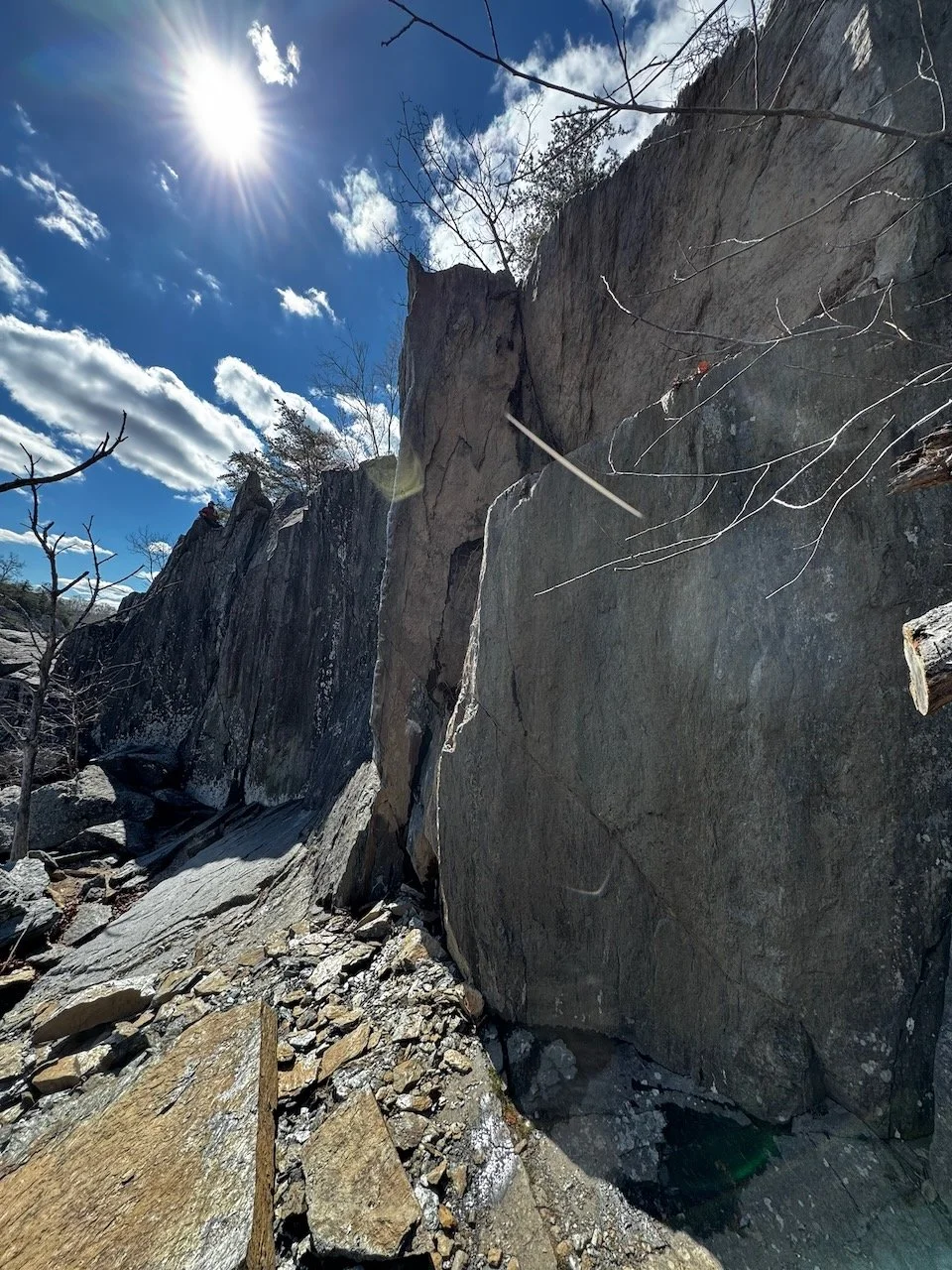
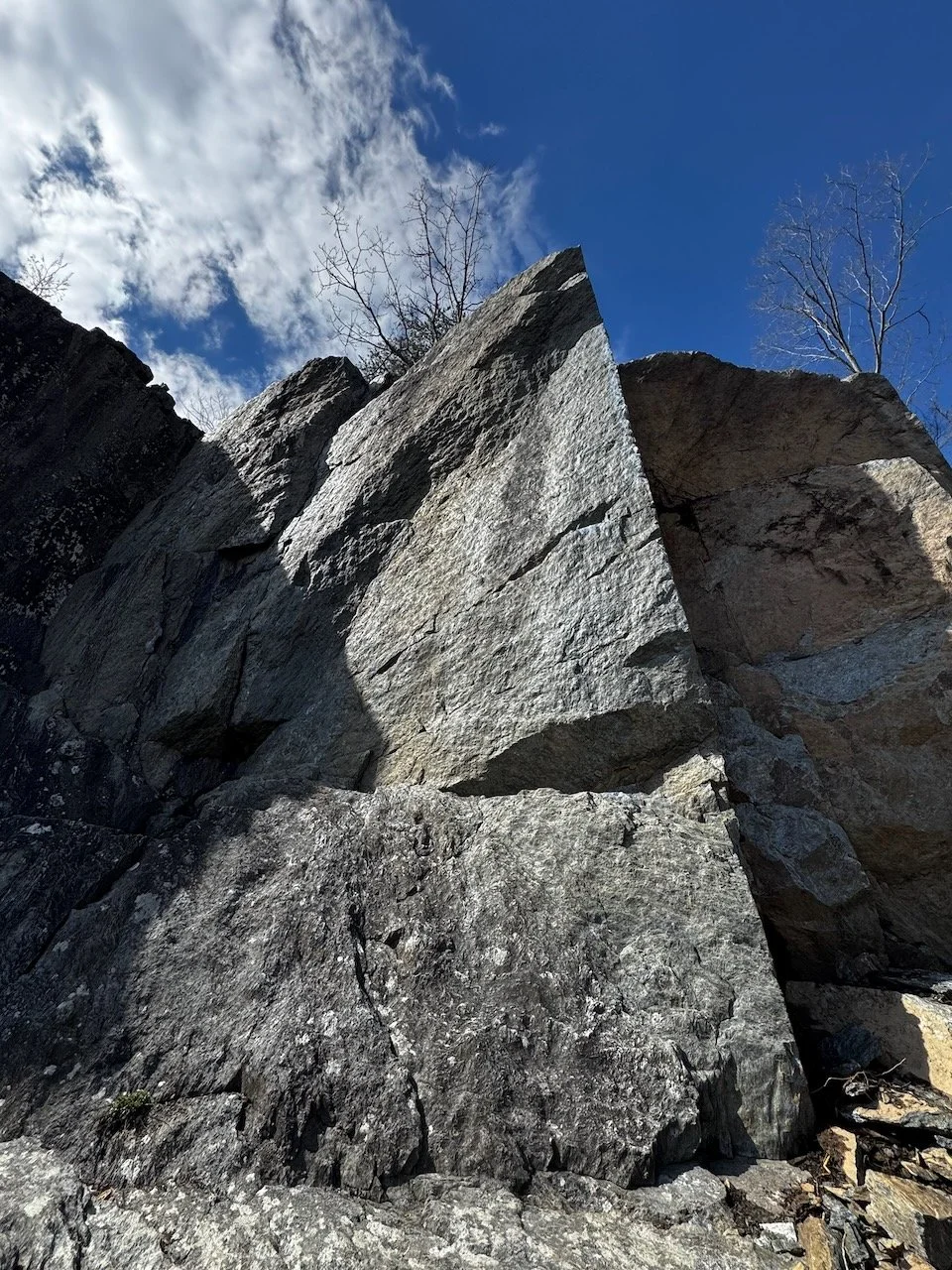
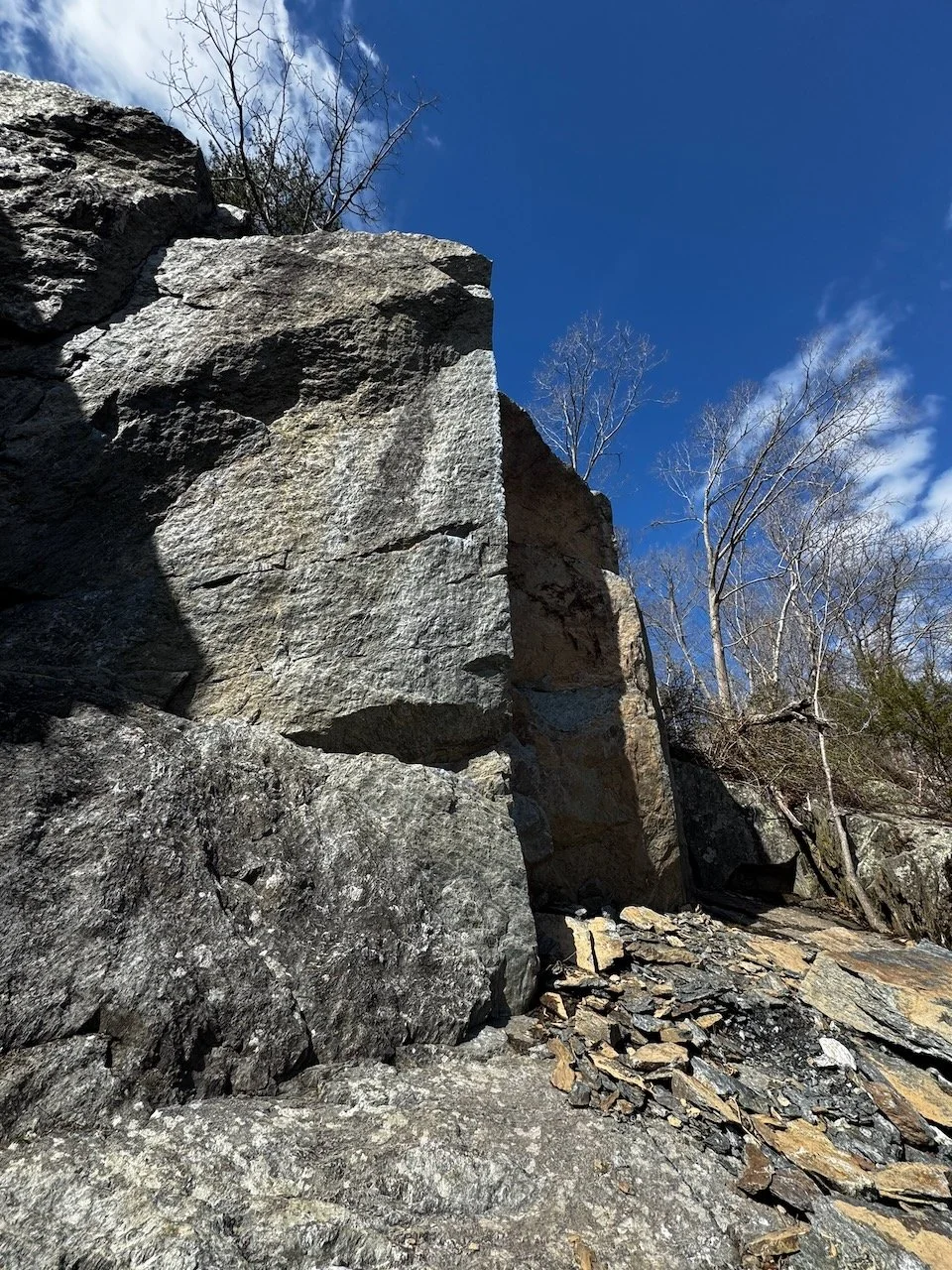
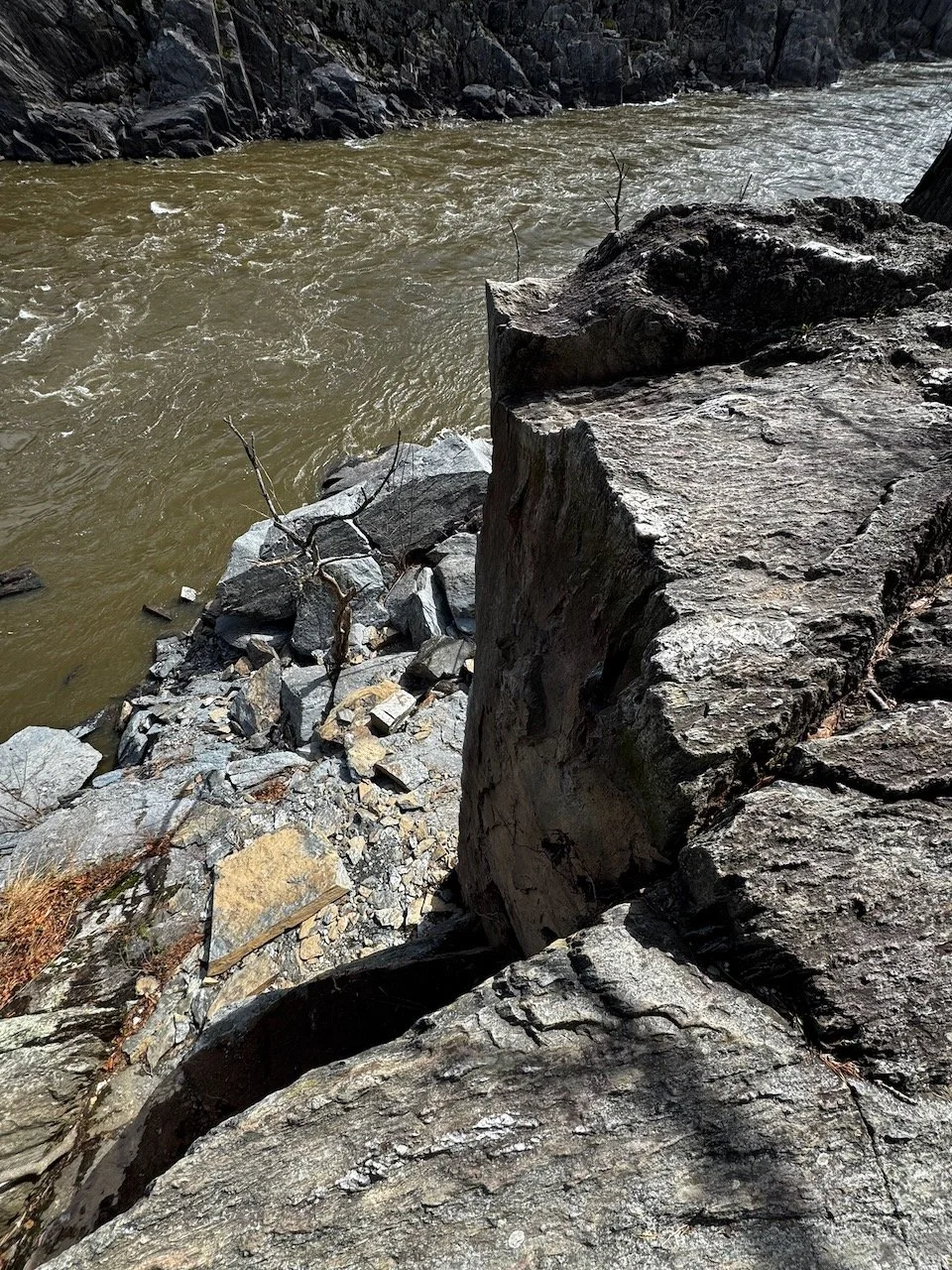
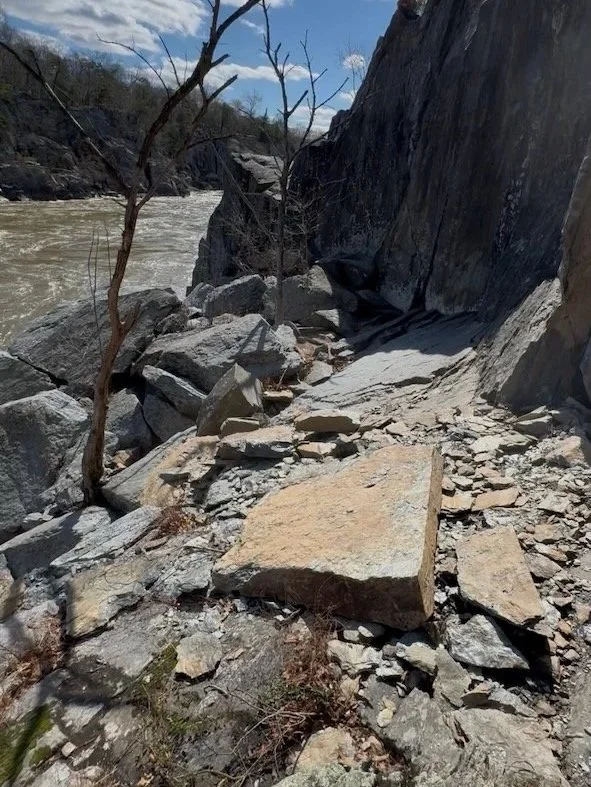
The Aid Box crag in Great Falls NP, Virginia, saw significant rockfall between 3/11/26 and 3/14/26. The overhanging roof that formed the route Potomac Valley Overhang (5.12) and the right side of the Lost Arrow (5.10) crack is completely gone, exposing a new arete.
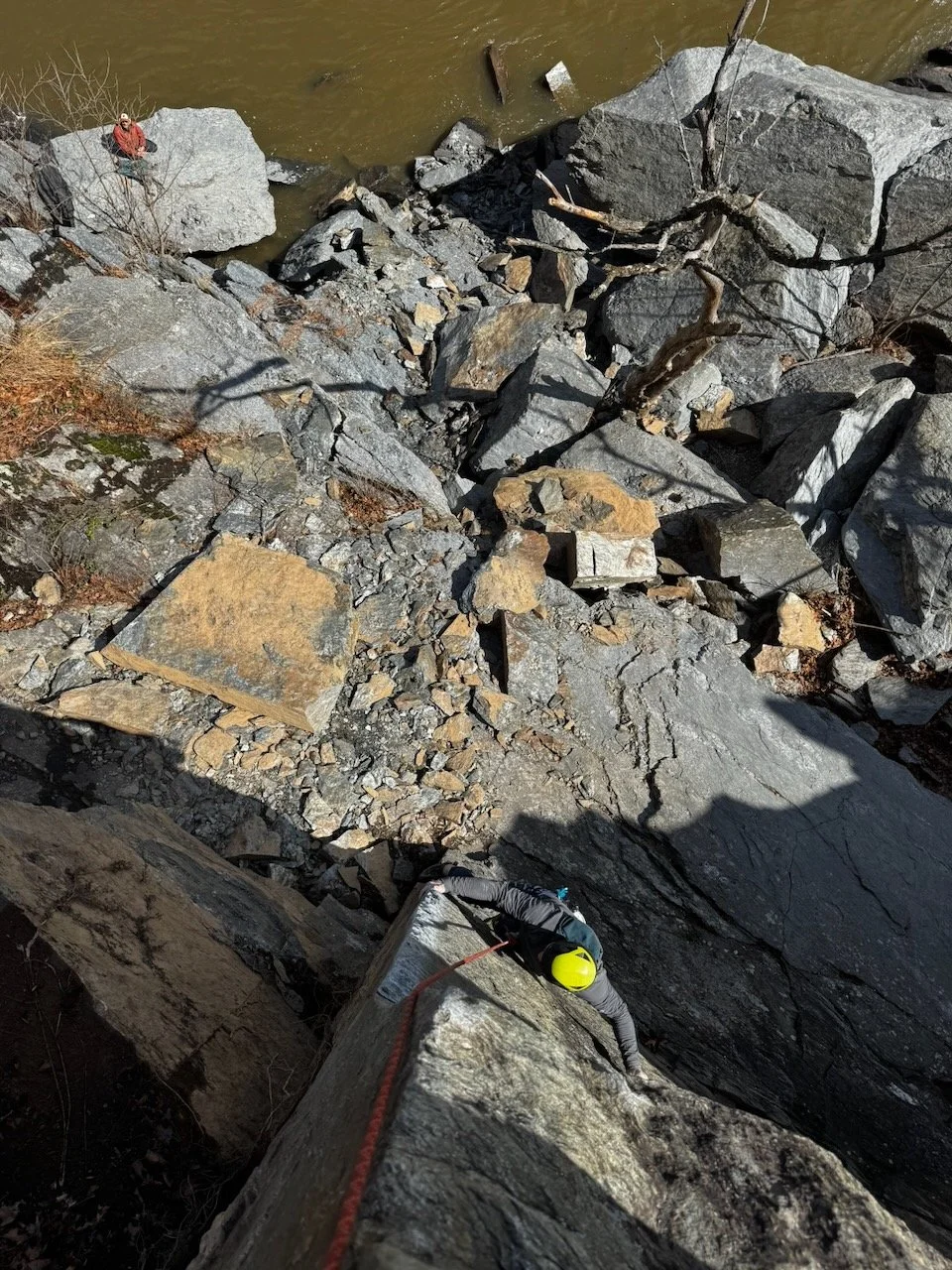
On 3/17, we headed in to check out the scene and set up a rope to inspect and clean the new face. We pulled off the obvious loose flakes but a top belay is recommended for the time being!
The new arete features some interesting wide pinch and compression moves on balancey feet formed by piton scars; Tim and I both thought the crux was the first transition from the face around the corner. Conditions were too cold at 30° to feel our fingers for long but local crusher H was set to nab the first ascent when we had to head out.
Caution: The sloping base is covered with broken slabs and gravel, watch your step!Some loose rock may remain on the route until it cleans up; helmets and top belaying may be a good idea.
IS IT SAFE TO CLIMB? Climbing is always at your own risk and there is no way to guarantee the cliff line is now 100% stable; geologic time includes now. This fall appears to be centered on the specific detached block and came with plenty of warning.
Items of note -
It’s fascinating to see how deep the Lost Arrow crack ran in the cliff face and how deep the tree roots have reached. Watch for changing condition of the tree near the edge, which now has some exposed fine roots.
The new arete is a rare chance to see how pitons scar the inside of the rock as well as the surface!
This fall was not sudden—the Lost Arrow crack has been noticeably widening over the last six months and was fists at the top as of a week ago, after a winter of deep freeze and thaw—a good reminder to climb with caution anywhere after seasonal weather cycles.
We thought the moves were in line with other Great Falls 5.9-9+ routes; the grade may change as the route cleans up.
Lost Arrow (Terrapin Station variation) before rockfall.